
Last updated November 25, 2026
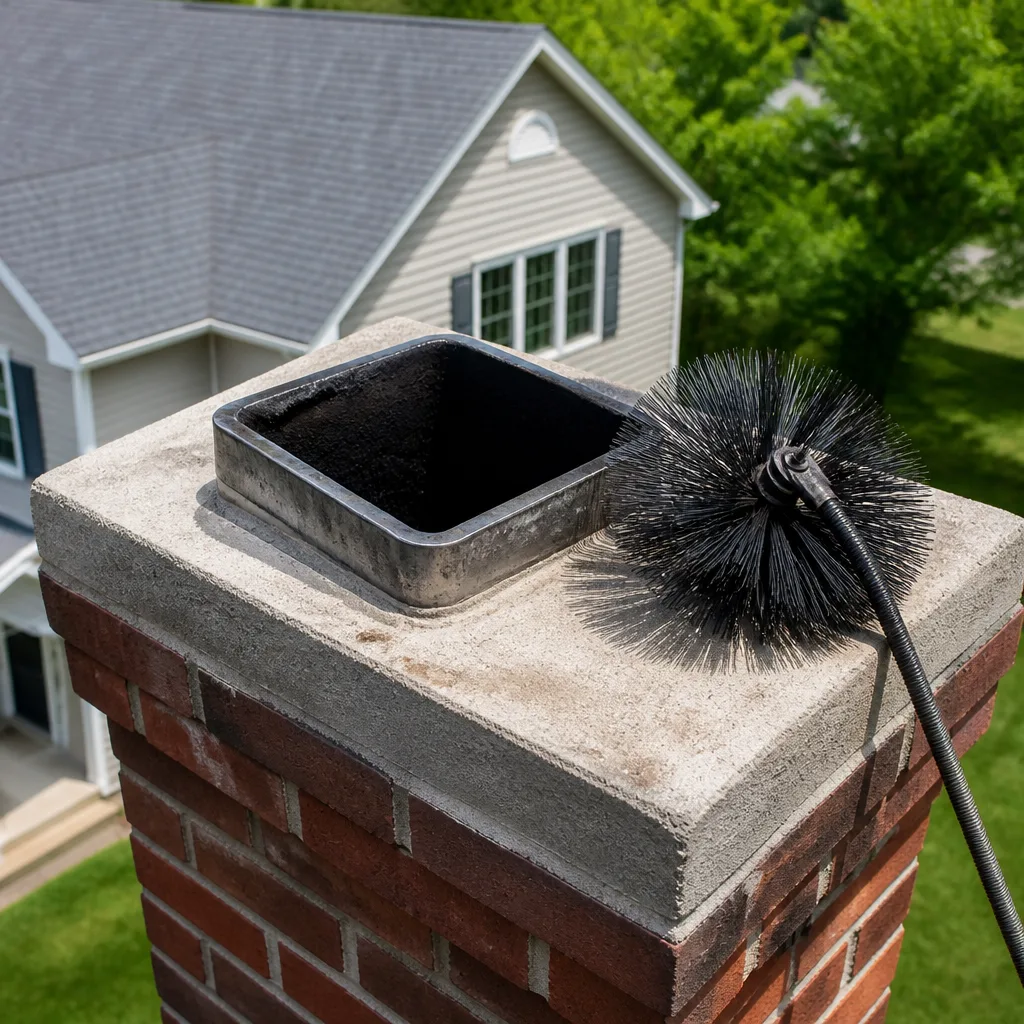 Sweep & inspection
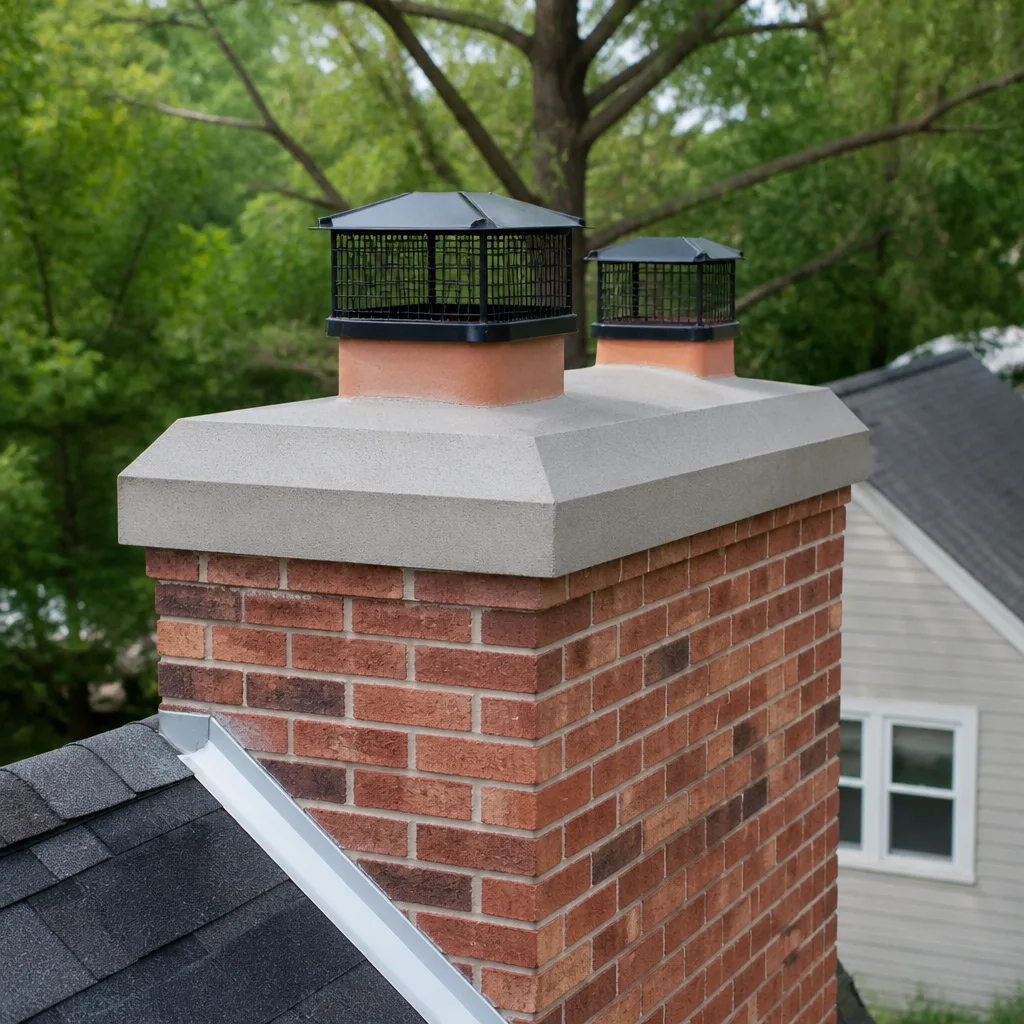 Caps & crowns
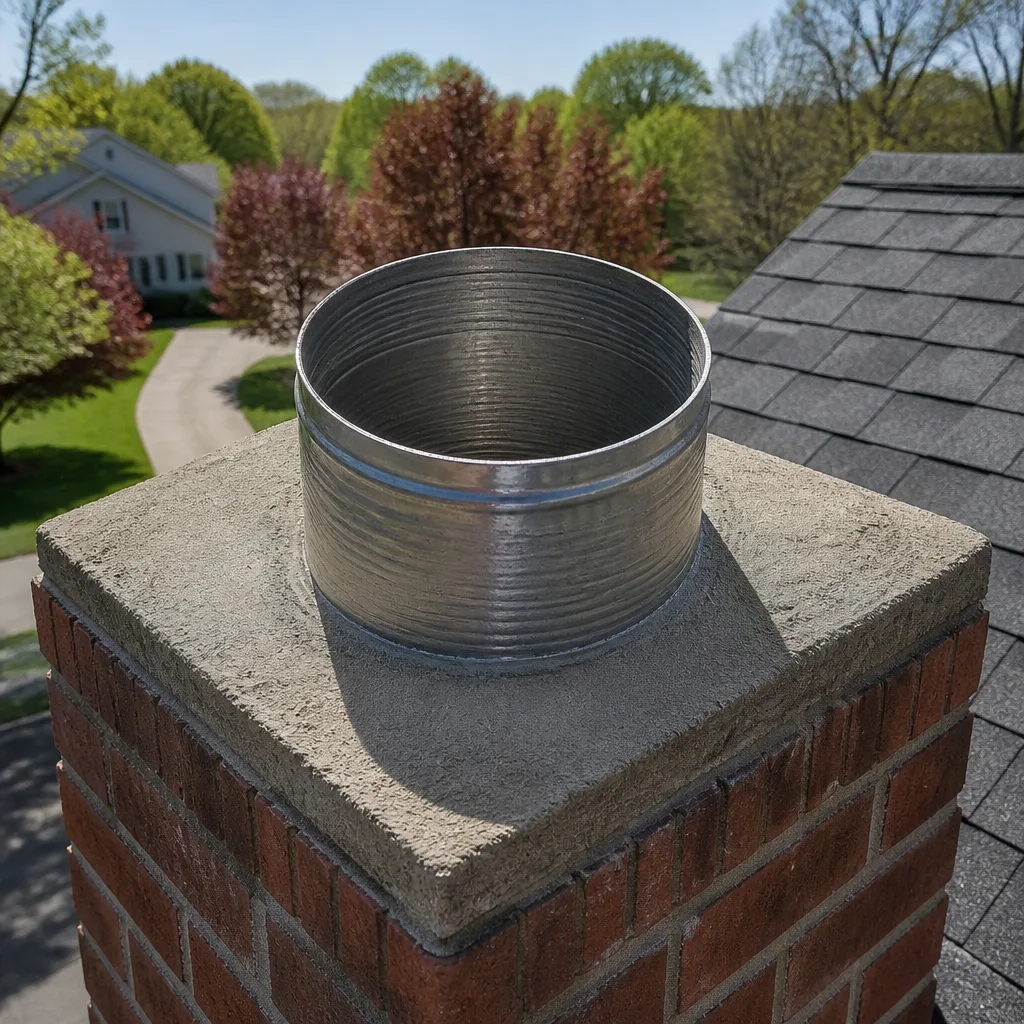 Flue relining
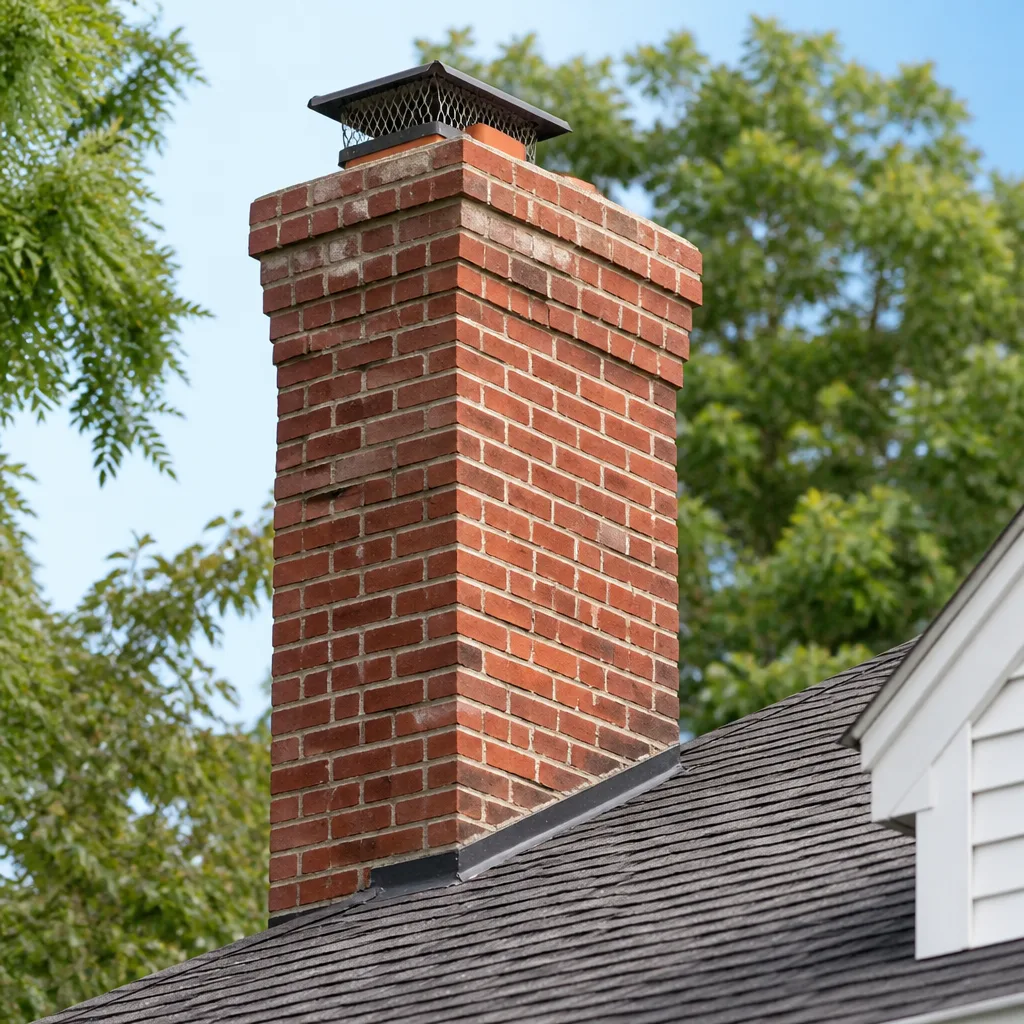 Masonry repair
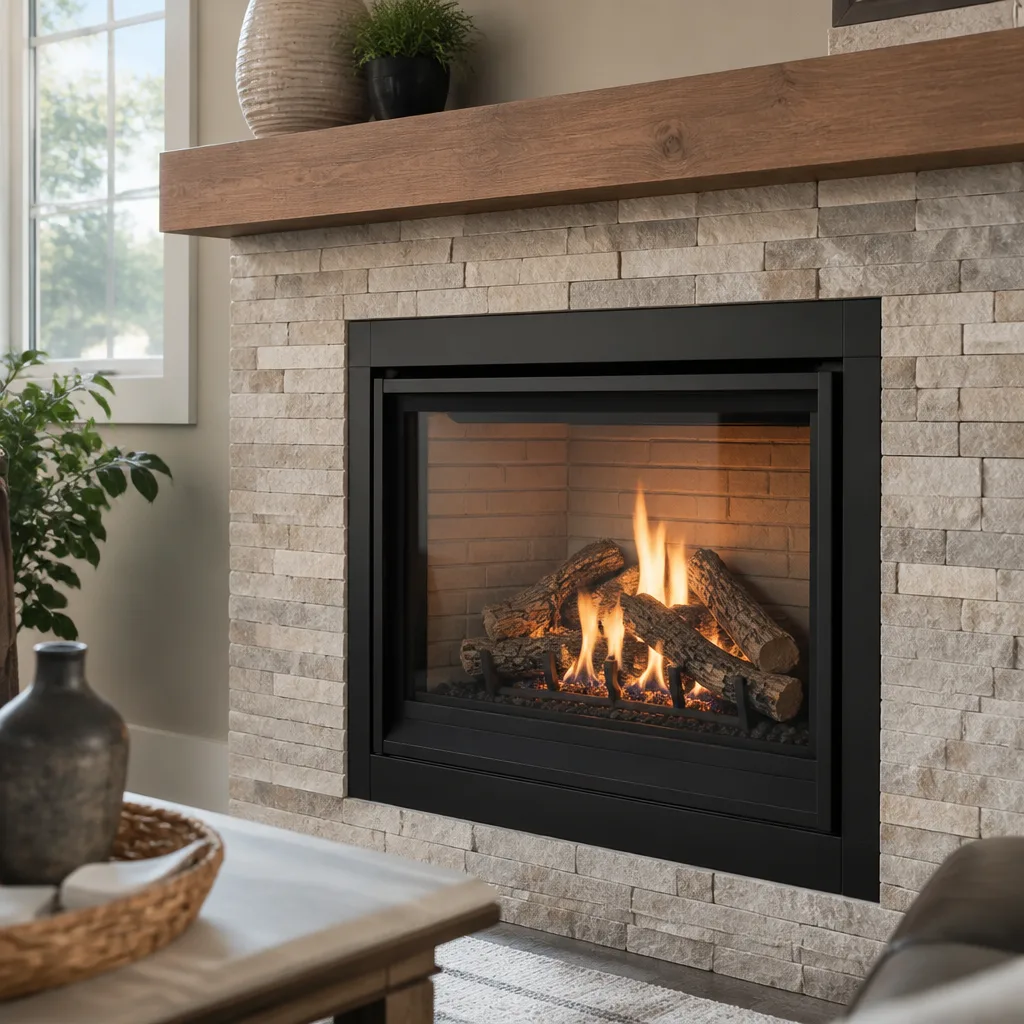 Gas fireplace service
Level 1 sweep and inspection to the NFPA 211 annual standard - flue, crown, cap, and flashing checked and photographed
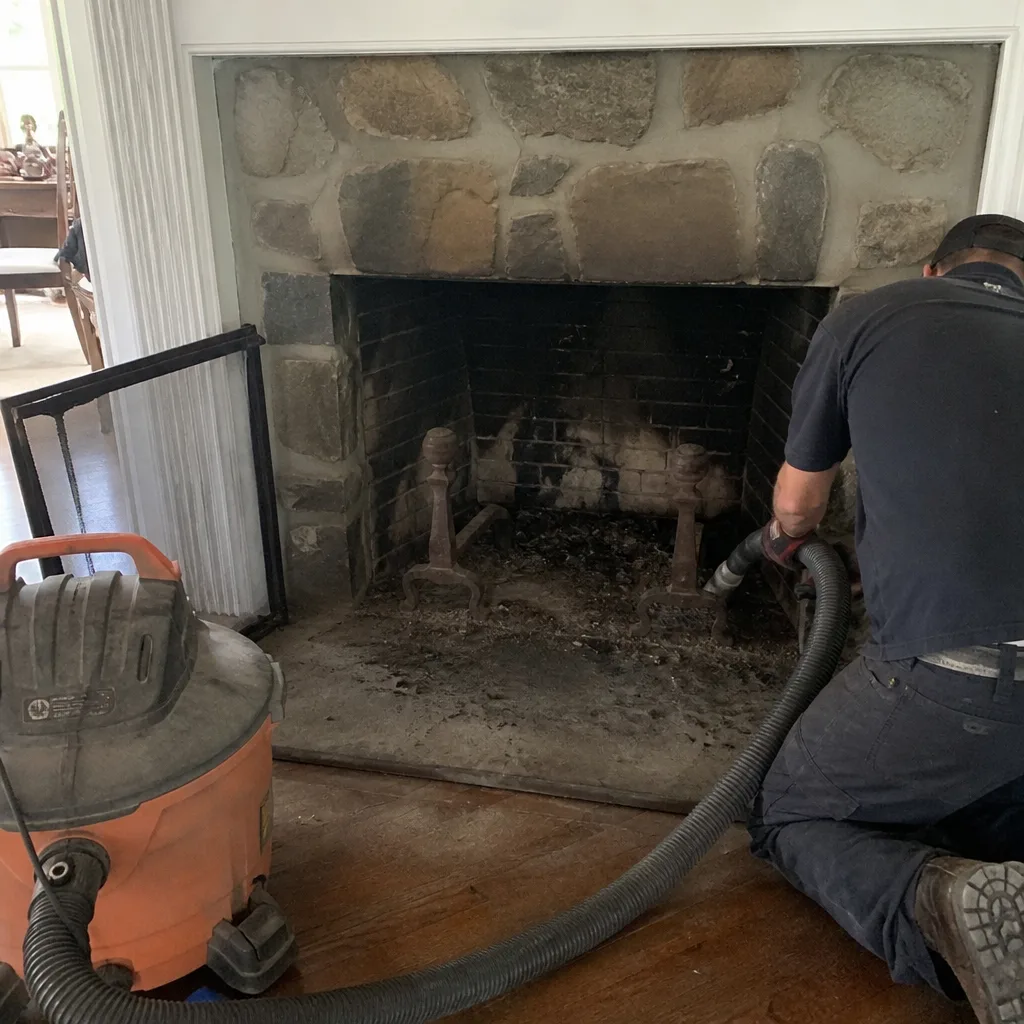
Chimney sweep logs do not sweep chimneys. They loosen some creosote - which then falls where a brush and vacuum still have to collect it.
Chimney Cleaning Warning Signs: A Kingsbridge Homeowner’s Reference Guide
A white stain on your exterior chimney brick isn’t cosmetic. It’s efflorescence, and it means water is moving through your masonry from the inside out, which usually means the crown above it or the liner inside it has already been compromised. Most homeowners see that stain and assume it’s weather staining to be painted over. That single misread is the reason this guide exists. Warning signs in a chimney system are rarely about dirt. They’re about moisture, draft, heat, and structural failure, and each symptom points to a specific component. By the end of this guide you’ll be able to read your own chimney the way a technician does, know which signs mean stop using the fireplace today, and know which ones can wait for a scheduled visit. This is written from Kingsbridge, for Kingsbridge homeowners.
Styles & brands we work with
- Sweep & inspection
- Caps & crowns
- Flue relining
- Masonry repair
- Gas fireplace service
Quick Answer
The main chimney cleaning warning signs are: white staining on exterior brick (moisture intrusion through the crown or flashing), smoke rolling back into the room (draft or damper failure, not always a dirty flue), a low rumbling sound during use (a cracked liner expanding under heat), brown ceiling or wall stains near the chimney (flashing failure), and visible creosote glaze inside the firebox throat. Any of these warrants a professional inspection before the next fire. A smoky fireplace does not automatically mean the flue is blocked, and a gas fireplace that produces no smoke smell is not proof the flue is intact.
Table of Contents
- Why Chimney Warning Signs Get Misdiagnosed
- The Symptom-to-Component Map: What Each Sign Actually Means
- Signs You Notice During Use vs. Signs You Find During a Cold Inspection
- Which Warning Signs Mean Stop Using the Fireplace Today
- The Gas Fireplace Blind Spot
- What Home Inspection Reports Say About Chimneys – and What Buyers and Sellers Misread
- How Kingsbridge Weather Shapes Chimney Wear
- What a Professional Inspection Actually Checks, Step by Step
- Common Mistakes to Avoid
- When to Call a Professional
- Frequently Asked Questions
- The Bottom Line
Why Chimney Warning Signs Get Misdiagnosed
Homeowners are pattern-matchers, and chimneys are bad at giving obvious patterns. A smoky fireplace feels like a dirty chimney, so people book a sweep. But a smoke problem is a draft problem, and draft can fail for half a dozen reasons that have nothing to do with creosote buildup: a damper left partly closed, a flue that’s undersized for the firebox opening, a negative pressure problem in the house, or a cap that’s been bird-nested. Cleaning the flue won’t fix any of those.
The reverse also happens. A chimney that draws perfectly, produces no smoke, and looks clean inside the firebox gets ignored for years while a hairline crack in the liner quietly widens. No smoke smell is not a safety certificate. It only means the gases are going somewhere, and where they’re going might be into the wall cavity instead of up the flue.
There’s a third misdiagnosis that shows up in almost every Kingsbridge neighborhood we work in, from the older homes near the business district to the newer construction on the outskirts: people treat efflorescence as a paint problem. They seal it. They repaint it. And the water keeps moving behind the sealed surface, pushing mortar joints apart season after season until a repair that would have been a crown resurfacing becomes a rebuild.
The fix for all three misdiagnoses is the same: don’t match the symptom to the most convenient service. Match it to the component. That’s what the next section does.
The Symptom-to-Component Map: What Each Sign Actually Means
Use this as a reference table in list form. Each symptom below maps to a specific part of the chimney system, and the component is what determines whether you’re looking at a cleaning job or a repair.
- White, chalky staining on exterior brick – Efflorescence. This is moisture migrating through the masonry and depositing mineral salts on the surface as it evaporates. The water is getting in from above or from a compromised flashing at the roof line, which means the crown, the cap, or the flashing is failing. The liner above the stain is often compromised too, since the same moisture has been travelling through the flue structure. Not cosmetic. Needs a moisture and crown assessment.
- Smoke rolling back into the room – Draft or damper issue. The flue may be clean and still backdraft. Common causes: a damper that doesn’t fully open, a flue that’s too short or too narrow for the firebox, a blocked cap, or pressure imbalance in a tightly sealed house. A sweep alone won’t solve it. You need a draft diagnostic.
- A low rumbling or growling sound during a fire – Thermal expansion against a liner defect. A sound that wasn’t there before usually means a section of liner is cracked, spalling, or has separated from a joint and is expanding unevenly under heat. This is a fire hazard symptom. Stop using the fireplace until it’s inspected.
- Brown or tan ceiling or wall stains near the chimney – Flashing failure at the roof penetration. Water is running down the outside of the flue and finding the path of least resistance into the ceiling. This is a water intrusion problem first and a chimney problem second, but it always starts at the flashing.
- Visible creosote glaze on the firebox throat – The firebox throat is the leading indicator of what’s happening higher up. Glazed, shiny, tar-like creosote is stage-three creosote, the kind that ignites. A dusting of soot is routine; a glassy glaze is not. This warrants a proper chimney sweep and a flue camera inspection.
- Soot flecks or black residue on the mantel or hearth – A sign of backdraft, poor draft, or a fire burning too cool and smoldering. It’s not just mess; it’s an indication that combustion gases are escaping into the room rather than up the flue.
- A cap with missing screens or bent edges – Animal entry and water entry. A compromised cap lets birds, squirrels, and rain in. Gelco and Famco cap products are built for exact fit for a reason: a gap of a fraction of an inch is an open door.
If you find one of these signs, don’t try to interpret it by severity. Interpret it by component. That’s the difference between a routine clean and a structural repair, and it’s the difference between a fire that’s safe and one that isn’t.
Signs You Notice During Use vs. Signs You Find During a Cold Inspection
Warning signs divide cleanly into two groups: those that only reveal themselves while the fireplace is burning, and those that are visible when the system is cold. Most homeowners only ever look at the second group, which is why the first group keeps getting missed.
Signs that only appear during use
- Excessive smoke in the room – Smoke that doesn’t clear within a few minutes of lighting is a draft problem. Note whether it happens at startup only (often normal, especially in a cold flue) or throughout the burn (not normal).
- Slow draw or a lazy fire – A fire that won’t take, keeps dying down, or produces visible smoke at the top of the firebox is telling you the flue isn’t pulling. Check for a closed damper, a blocked cap, or a flue that’s undersized.
- Visible ember discharge – Sparks or embers flying out of the firebox or landing on the hearth means either a missing or damaged spark screen or a draft problem pulling them out. This is an immediate stop-use symptom, because it’s a fire-into-the-room hazard.
- Rumbling, growling, or popping sounds – As covered above, this is thermal expansion against a liner defect. Don’t keep burning to “see if it settles down.”
- Smoke or a burning smell in upstairs rooms – Gases escaping the flue and travelling through the wall or floor cavities. A carbon monoxide concern, not a cosmetic one.
- A sudden change in how the fireplace behaves – If this winter’s fire burns differently from last winter’s, something has changed in the system, even if nothing looks different from the hearth.
Signs visible during a cold inspection
- Efflorescence on exterior brick – White staining, covered above.
- Deteriorated mortar joints – Crumbling, receding, or sandy mortar at the exterior or in the firebox. Water is doing the work.
- A cracked or spalling crown – The crown is the concrete cap at the top of the chimney that sheds water. A hairline crack is normal wear; a crack that runs to the edge or a chunk missing is not.
- A cap that’s come loose, rusted through, or missing its screen – A visual check from the ground with binoculars covers most of this.
- Rust on the damper or firebox parts – A moisture indicator. If the damper is rusted, water is arriving from somewhere it shouldn’t.
- Ceiling or wall stains near the chimney chase – Flashing, covered above.
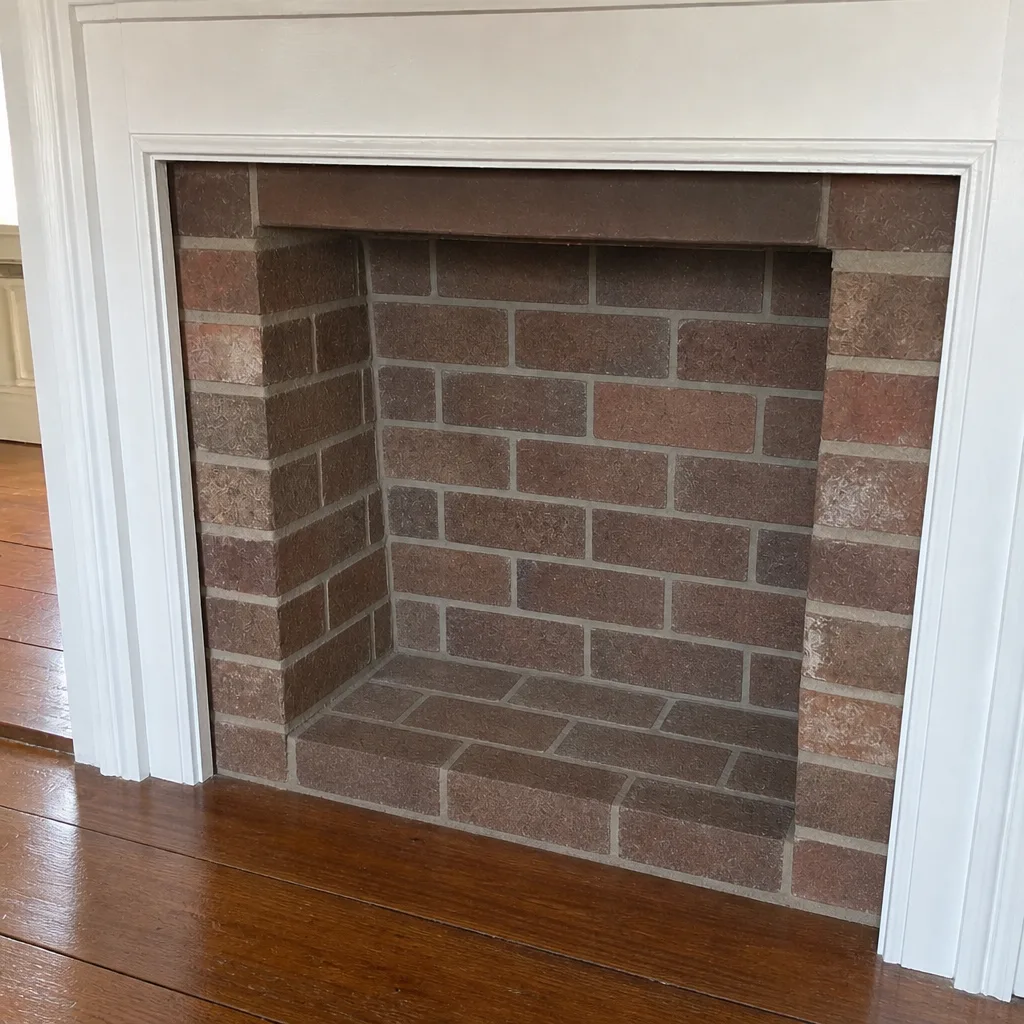
- A firebox with missing firebrick or cracked refractory panels – A fire-safety item, because the firebox is designed to contain the fire’s heat and a gap lets it reach the structure behind.
We recommend doing both checks: a quick visual cold inspection every fall, and a note-taking habit during the first few fires of the season. In our experience, the homeowners who catch issues earliest are the ones who know what their fireplace is supposed to look and sound like.
Which Warning Signs Mean Stop Using the Fireplace Today
Not every symptom is an emergency. Some are deferred maintenance that can wait for a scheduled visit. Others are immediate fire or carbon monoxide hazards and the fireplace should stay cold until a professional has inspected it.
Stop using the fireplace immediately if you notice:
- A rumbling, growling, or popping sound during the burn. Thermal expansion against a liner defect. The next burn could be the one that pushes heat through the crack.
- Smoke or a burning smell in upstairs rooms or other living spaces. Combustion gases are escaping the flue, and that includes carbon monoxide.
- Visible ember discharge or sparks entering the room. A fire-into-the-room hazard, and typically a sign of a missing screen or a draft problem that needs diagnosis.
- Cracked or missing firebrick, or a broken refractory panel in the firebox. The firebox containment is the first line of defense. A gap means heat reaches the structure behind it.
- Glazed, tar-like creosote visible in the flue throat. Stage-three creosote is the ignition risk that chimney fires are made of. Not a “schedule it for spring” item.
- Any smell of gas near a gas appliance or a gas log set. Stop using it, ventilate, and call your gas utility before you call anyone else. Don’t troubleshoot a gas line yourself.
These can usually wait for a scheduled visit:
- White efflorescence staining without active water leaking into the home
- A hairline crack in the crown with no visible spalling
- Soot buildup on the firebox walls
- A damper that sticks but still opens and closes fully
- Rust on exterior hardware
- A cap that’s intact but dulled or weathered
The distinction matters because it keeps you from panicking over cosmetic wear and from ignoring a real hazard. If you’re not sure which bucket a symptom falls into, the safe assumption is “stop using it and get it looked at,” and the cost of an inspection is small compared to the cost of being wrong.
The Gas Fireplace Blind Spot
A gas fireplace produces no creosote because there’s no wood to burn. Homeowners take that to mean a gas fireplace needs no attention. That’s not how it works.
Gas fireplaces still have a flue. The flue carries combustion byproducts – water vapor, carbon dioxide, traces of carbon monoxide – and it still accumulates dust, debris, and in some cases animal nests or roofing grit. A blocked gas flue can backdraft carbon monoxide into the room just as a wood flue can. And a gas log set installed in an existing wood-burning firebox still sits in contact with whatever creosote the previous wood fires left behind, which is a fire risk the gas appliance doesn’t remove.
The false sense of security runs the other direction too. Because there’s no smoke and no creosote smell, a homeowner can go years without looking at the flue, and never notice a cracked liner, a separated joint, or a cap that lost its screen. The flue is still a chimney. It still needs an annual inspection.
We inspect gas systems the same way we inspect wood-burning ones: camera down the flue, check the venting, confirm the cap and crown, and look at the firebox condition. If your home has both a wood fireplace and a gas appliance sharing a chase, both need eyes on them. We work with Olympia Chimney and Copperfield components where venting repairs come up, and with DuraFlex flexible liner systems where a reline is needed. The system gets fixed properly rather than patched.
What Home Inspection Reports Say About Chimneys – and What Buyers and Sellers Misread
If you’re buying or selling a home in Kingsbridge, the chimney section of the home inspection report is one of the most misread parts of the document. A few common patterns worth understanding before you panic or negotiate.
- “Evidence of past water intrusion at chimney” is not the same as “chimney needs full rebuild.” It usually means efflorescence, a crown crack, or flashing. Those are three separate repairs with three different price points, and the inspection report almost never differentiates them. A proper chimney inspection does.
- “Chimney not inspected” is a common line item, and it doesn’t mean the chimney is fine. Home inspectors who don’t do chimney work often write exactly this to protect themselves. The buyer should read it as “unverified,” not “cleared.”
- “Creosote present” without a level is not actionable. Creosote is measured in stages, and stage one is normal soot. A report that just says “creosote present” tells the seller nothing about whether a sweep will resolve it or whether the flue needs attention.
- “Flue liner not visible” is another way of saying the inspector couldn’t see it. A camera inspection is what actually answers the question.
- Any report language recommending a “Level 2” inspection is a specific recommendation to look at the flue with a camera, and it should be read as “we need more information,” not “we found the problem.”
For buyers, our advice is to get the chimney inspected independently of the home inspection before you finalize. For sellers, our advice is the same and runs the other way: getting the inspection done before the report hits is the difference between a clean negotiation and a price reduction you didn’t expect. Either way, the inspection is what separates “this report is scary” from “here’s what this chimney actually needs.” If a report recommends a full-system inspection or points to a symptom that could mean liner damage, that’s the moment to call in a chimney technician rather than guess. If a report uses a brand name like HeatShield as a suggested repair method, that’s a resurfacing system for a deteriorated liner, not a full replacement, and the cost difference is significant.
How Kingsbridge Weather Shapes Chimney Wear
Kingsbridge runs hot summers, cold winters, and a hard freeze-thaw cycle through the shoulder seasons. That cycle is the single biggest driver of chimney wear in this area, and it’s why the efflorescence warning sign is so common here.
The mechanism is simple. Masonry absorbs water during rain, the water freezes and expands inside the brick or mortar, and the freeze pushes the material apart. When it thaws, the damage stays. Repeat that cycle across a winter and a masonry chimney that would last generations in a dry climate can start spalling in a decade. The same cycle cracks crowns, opens flashing seams, and finds its way into hairline cracks in the liner.
Wood smoke and creosote add a second layer. Cold flues take longer to warm up, which means the first several fires of the season are the smokiest and the ones that deposit the most creosote. Those deposits then sit through the spring and summer, absorbing moisture, and by fall they’re heavier and harder than they were when they were laid down. This is why we recommend an autumn sweep and inspection rather than a spring one for most Kingsbridge homes: you want the flue clean and dry going into the cold season, not the warm one.
The shoulder seasons matter too. A chimney crown that would shed a summer thunderstorm can fail under a February ice load, and a flashing that survived the fall can open up by March. That’s why we lean hard on the inspection-first approach. A sweep that doesn’t look at the crown, the cap, and the flashing hasn’t told you what your chimney needs, because a cleaning never will.
What a Professional Inspection Actually Checks, Step by Step
An inspection is not a sweep with a clipboard. Here’s what a proper inspection covers, so you know what to expect and what the technician is doing:
- Exterior walk-around. The crown, the cap, the flashing at the roof penetration, the exterior masonry and mortar joints, and any visible staining or spalling. Binoculars cover most of the roof line without a ladder.
- Firebox and damper check. Firebrick condition, refractory panels, the damper’s operation, the firebox throat, and creosote stage at the throat. This is where the first clear picture of the flue’s condition usually shows up.
- Camera inspection of the flue. A flue camera run the full length, looking for cracked tiles, separated joints, missing mortar, gaps in a liner, and any evidence of past chimney fires. This is the step that actually finds liner damage, and it’s the step most cheap sweeps skip.
- Smoke or draft test. A draft test confirms the flue is pulling rather than backdrafting. If a chimney passes the camera step but fails the draft test, the problem is upstairs or in the house, not the cleaning.
- Cap and screen check. A visual and physical check that the cap is intact, sized, and screened. Gelco and Famco caps fitted to the actual flue dimensions are what prevent animal and water intrusion; a cap fitted by eye doesn’t.
- Moisture and flashing assessment. Confirmation that the flashing at the roof is still doing its job and the crown is shedding water. A chimney that passes all other tests and fails this one still has a moisture problem coming.
- Written report and photo evidence. Every finding should come with a photo or a camera still, and a clear explanation of what it means and what it needs. If you can’t see it, you shouldn’t have to pay to fix it. That’s the standard we set.
We follow this sequence on every inspection because the out-of-order version misses things. If you clean before you inspect, you remove the evidence. If you inspect before you clean, you find out what’s actually going on. From annual sweep to full liner restoration, we handle the whole system, and that starts with knowing what’s inside it.
Common Mistakes to Avoid
- Treating efflorescence as paint-deep cosmetic work. Sealing it traps the moisture inside the brick, which accelerates spalling through a Kingsbridge freeze-thaw winter. It has to be diagnosed as water intrusion, not surface damage.
- Assuming a smoky fireplace means a dirty flue. It often means a draft problem, a damper problem, or a negative pressure issue that a sweep won’t fix. Booking a sweep for a smoke problem and being surprised it’s still smoky afterward is one of the most common callbacks in the trade.
- Reading “clean firebox” as “safe chimney.” The firebox is the most visible part and the least diagnostic. The liner above it is where the hazards sit, and you can’t see it from the hearth.
- Skipping the gas fireplace because there’s no creosote. Carbon monoxide doesn’t care whether the fuel is wood or gas, and a gas flue still needs an annual look.
- Hiring whichever sweep is cheapest without asking what “inspection” includes. A $99 sweep typically doesn’t include a camera inspection, and the camera inspection is what finds the components that need repair. Ask what’s being checked, not just what’s being cleaned.
- Buying a home without an independent chimney inspection. The home inspection report is a starting point, not a verdict, particularly for the chimney section. A chimney inspection before you close is the only way to know what you’re actually buying.
- Delaying a repair that a professional told you was urgent because it “wasn’t bothering you.” A rumbling liner doesn’t have to bother you to be a hazard. Fire safety issues are silent until they aren’t, and that’s exactly the wrong time to learn about them.
When to Call a Professional
Call a professional chimney technician in Kingsbridge if you notice any of the following: white staining or spalling on exterior brick, brown stains on nearby ceilings or walls, smoke or ember discharge into the room during use, a rumbling or growling sound from the firebox, glazed creosote at the throat, or a home inspection report that flagged the chimney at all. Also call if any part of the system has sat unused for more than a year, if you’ve just moved into a home where the chimney’s history is unknown, or if you’re selling and want to know what a buyer’s inspector will find before they find it. A chimney that’s sat idle collects animals, moisture, and debris, and none of that is visible from the hearth. Chimney Sweep Kingsbridge offers free estimates in Kingsbridge – call (866) 937-8901. We answer 24/7. Fast dispatch from 7am to 7pm, Sunday through Friday.
Safety is the reason to act but not the reason to panic. The vast majority of chimneys we inspect fall into one of three groups: clean and safe, needs a cleaning and one small repair, or needs a real structural fix. Only the third group is a genuine alarm, and the first two are almost always cheaper than the homeowner expected. That’s the value of an inspection-first approach: it tells you which group you’re in before anything gets done.
Frequently Asked Questions
A routine chimney sweep in Kingksbridge typically falls in a modest range that reflects whether the flue needs a basic cleaning or a full inspection with camera. The written estimate sets the final price and is free. Call (866) 937-8901 for an exact quote.
Only a camera inspection can answer that, and that’s the point. A cracked or separated liner is a real hazard, but many liners that get flagged by a symptom turn out to be intact, and a smaller repair resolves the issue. Nothing should be recommended without photo or video evidence you can see for yourself, and we won’t recommend a reline without it. That’s the difference between HeatShield ceramic resurfacing, which restores a deteriorated liner without replacement, and a full DuraFlex reline, which is what a genuinely failed liner needs. The two have very different price points, and a proper inspection is what tells you which one you’re looking at. Call (866) 937-8901 for an exact quote – estimates are free.
For a wood-burning fireplace that sees regular winter use, an annual sweep and inspection is the standard. For a gas appliance, an annual inspection is still the standard, even though it doesn’t produce creosote. If you burn heavily, burn green or unseasoned wood, or have a fireplace that’s sat unused for a season, closer attention is warranted. Call (866) 937-8901 for an exact quote – estimates are free.
Creosote accumulates and glazes, which raises chimney fire risk, and small liner or crown problems that would have been simple repairs widen into structural ones. Nothing dramatic happens most years, and that’s exactly why skipping it feels harmless. The one year it does matter, the cost is much higher than the sweep you skipped. Call (866) 937-8901 for an exact quote – estimates are free.
Not necessarily. A blocked or cracked flue can pull fine into the room while sending combustion gases into the wall cavity, and you won’t see or smell it. Carbon monoxide is the specific hazard there, and it’s the reason “no smoke” is not a safety check. A camera inspection is what confirms the flue is actually sound.
We answer 24/7 and dispatch Sunday through Friday, 7am to 7pm, so same-day visits are common when a slot is open. A call outside dispatch hours is booked into the next opening, Sunday through Friday, 7am to 7pm. Call (866) 937-8901.
Estimates are free. The price for any work is set per job by the written estimate, and nothing is recommended until you’ve seen the photo and camera evidence for yourself. Call (866) 937-8901 for an exact quote.
The Bottom Line
Warning signs in a chimney are almost never about dirt. They’re about moisture, draft, heat, and structure, and every sign maps to a specific component. White staining is water intrusion. Smoke backdraft is a draft or damper problem. Rumbling is liner expansion. Brown ceiling stains are flashing. Those five signs cover the majority of what a trained technician is looking for, and none of them are resolved by a sweep alone. Our work spans the whole system – chimney inspection, cleaning, chimney cap & crown work, liner and chimney repair – so you don’t have to source a separate contractor for each piece. We’ll tell you exactly what we find and what it means before any work begins. If you’re in Kingsbridge and want to know which group your chimney is in, call (866) 937-8901 for a free estimate. We answer 24/7. Fast dispatch from 7am to 7pm, Sunday through Friday. Visit Chimney Sweep Kingsbridge for the full range of services. Our technicians have up to 8 years of experience.
Written by the team at Chimney Sweep Kingsbridge.
See the difference
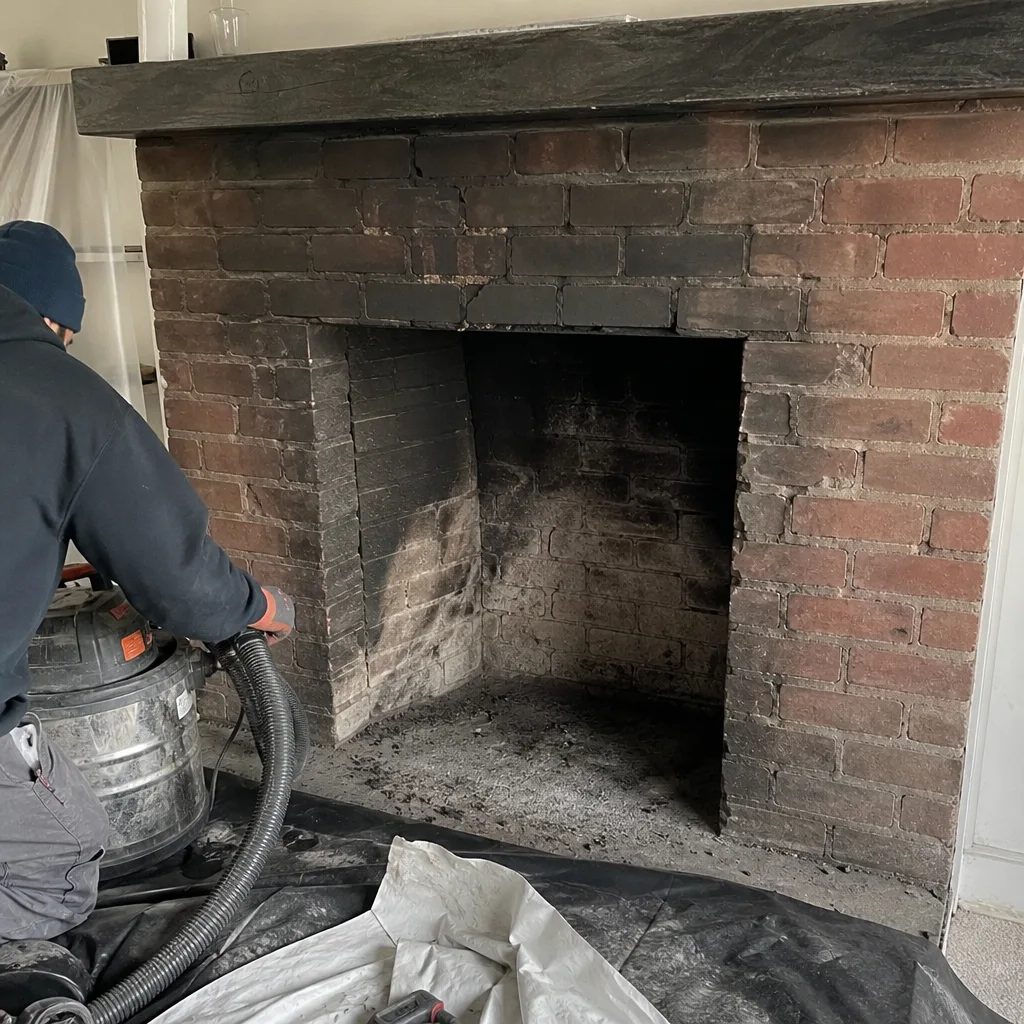 Before
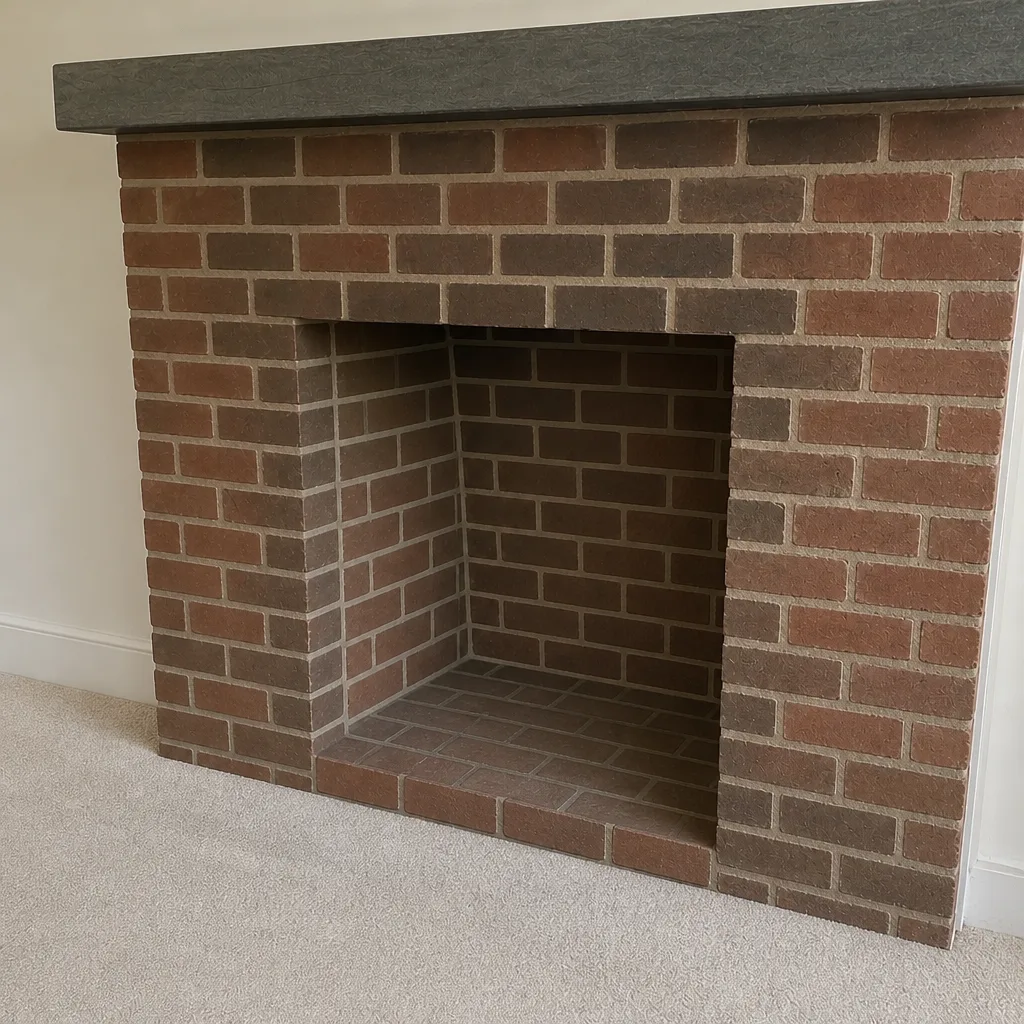 After
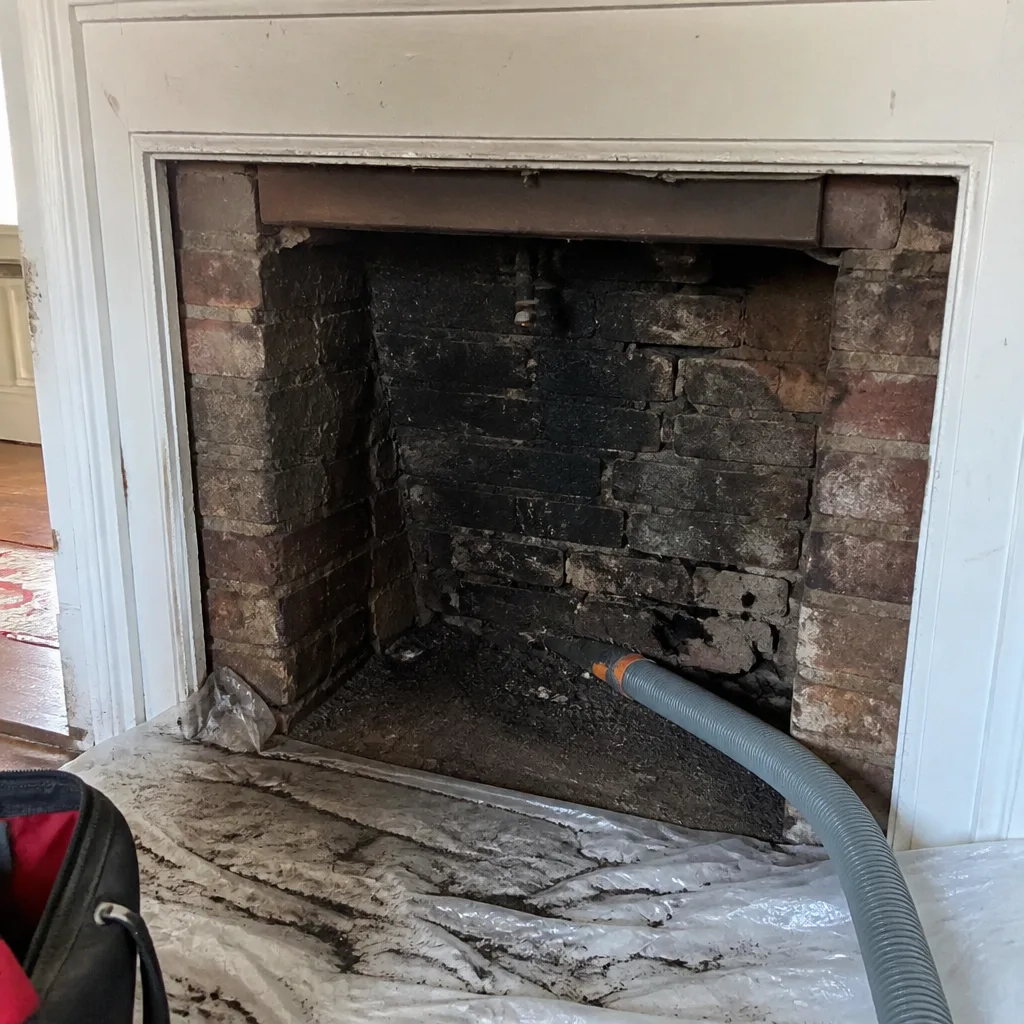 Before
 After
 Before
 After